
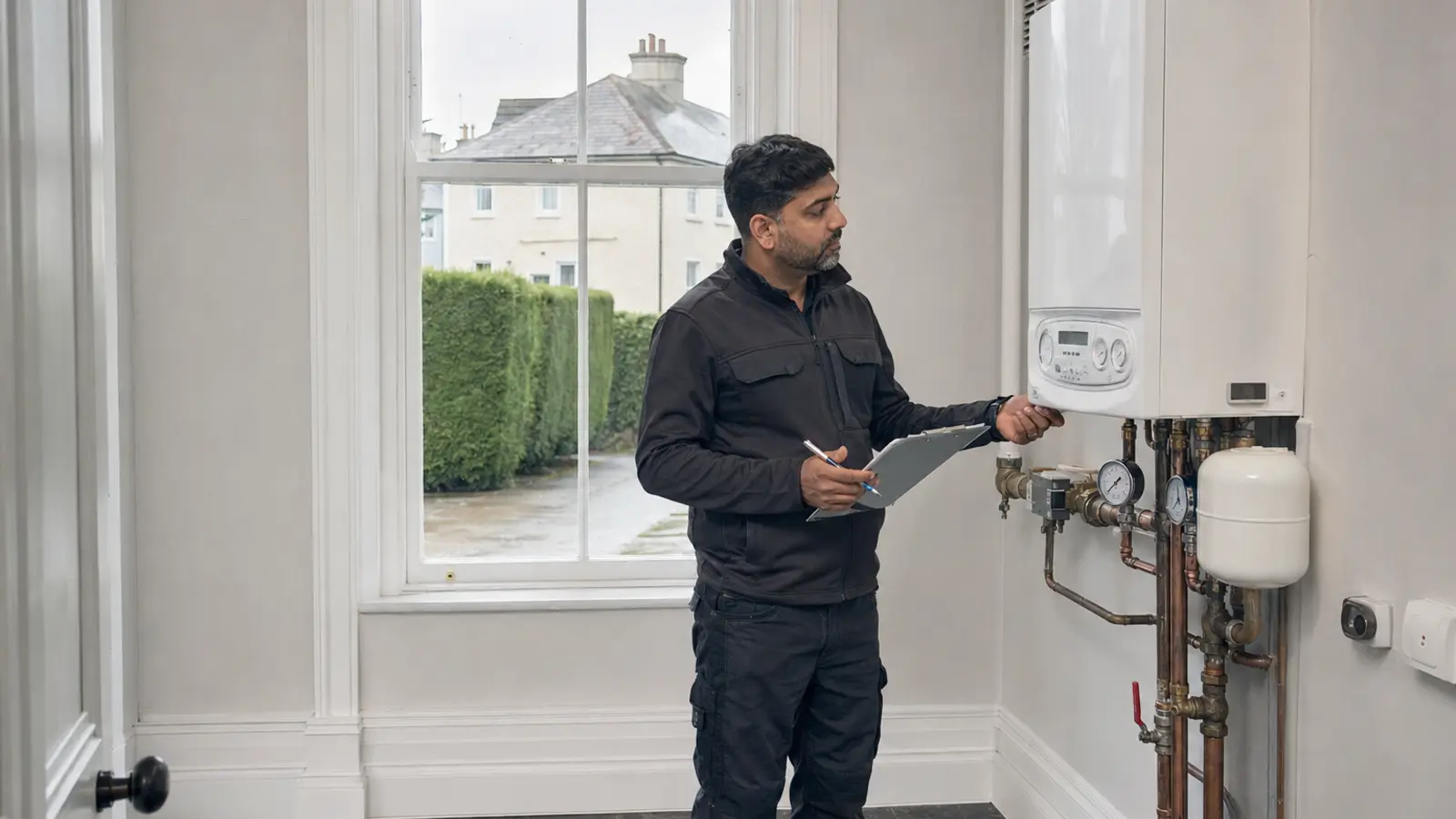
If you are getting a boiler installed, a gas hob fitted, or any work done on your gas supply in Ireland, you will hear the letters RGII. This guide explains what RGII registration means, why it is legally required, how to verify it, and what the consequences are of hiring an unregistered person for gas work.
What is RGII?
RGII stands for the Register of Gas Installers of Ireland. It is the regulatory body responsible for certifying and registering gas installers in Ireland.
RGII was established under the Gas (Amendment) Act 1987 and operates under the oversight of the Commission for Regulation of Utilities (CRU). It maintains a register of qualified gas installers and conducts ongoing assessment to ensure registered installers meet current safety standards.
The RGII scheme is entirely separate from general plumbing qualifications. You can be a fully qualified plumber — with a completed SOLAS apprenticeship — without being RGII-registered. RGII registration specifically covers work on natural gas and LPG systems.
What work requires RGII registration?
Under Irish law, the following work must be carried out by an RGII-registered gas installer:
- Installation, modification or repair of gas pipework
- Installation of gas boilers (combi, system and conventional)
- Connection of gas hobs, ranges and ovens
- Installation of gas fires and gas water heaters
- Any work on the gas meter installation or supply
- Installation of heat pumps connected to a gas backup system (in hybrid configurations)
If you have a gas meter in your home and someone is doing work that connects to your gas supply in any way, they need to be RGII-registered.
What is NOT covered by RGII
RGII registration covers gas work only. It does not cover:
- Oil boiler installation (covered by OFTEC registration for oil)
- Electric boiler installation (no equivalent mandatory scheme)
- General plumbing (water supply, drainage, waste)
- Solar thermal panel installation
- Air-to-water heat pumps (these work on electricity and refrigerant, not gas)
For oil boiler work, the equivalent is OFTEC (Oil Firing Technical Association) registration.
Why does RGII registration matter?
It is a legal requirement
Carrying out gas work without RGII registration is illegal in Ireland. An unregistered person working on your gas installation is breaking the law. More importantly, you are allowing illegal work to be done in your home.
Home insurance implications
If you make a claim for fire, explosion, or gas-related damage, your insurer will investigate the origin. If the work was carried out by an unregistered person and that work contributed to the incident, your claim may be rejected. This applies to kitchen renovations, boiler replacements, and gas fire installations.
Read your home insurance policy. Almost all Irish policies require that gas work is carried out by a “competent person,” which means RGII-registered.
Safety certification
Only RGII-registered installers can issue a Gas Completion Certificate (also called a safety cert or RGII cert). This certificate is:
- Required by your gas supplier (Bord Gáis/Gas Networks Ireland) for new connections
- Required when selling your home (conveyancing solicitors ask for certificates)
- Required for mortgage drawdowns on properties with gas
- Evidence of safe installation in any insurance claim
An uncertified installation cannot be retrospectively certified. If an unregistered person installs your boiler, you cannot later get an RGII cert for that installation without having a registered installer redo or re-inspect the entire job.
How to check RGII registration
RGII maintains a public register at rgii.ie. You can search by:
- Installer name
- Company name
- Registration number
- County
To verify your plumber: ask for their RGII registration number before work begins. Check it on rgii.ie. Takes under two minutes. This is the single most important verification step for any gas work.
Plumbers in our network are verified as RGII-registered before they can appear on this site.
What happens if you have had unregistered gas work done?
If you discover that previous gas work in your home was carried out by an unregistered person, you should:
- Contact an RGII-registered gas installer for a safety inspection
- Inform your home insurer (withholding known information from an insurer can affect future claims)
- Do not attempt to do anything to the gas installation yourself
The registered installer can assess the work, identify any safety issues, and certify the installation if it meets the required standard. If the work is substandard or unsafe, they will advise on remediation.
Gas Networks Ireland (the network operator) can also be contacted if you have serious concerns about gas safety. Their safety line is 1800 20 50 50.
RGII registration and heat pump upgrades
This is a common source of confusion. Most heat pump installations do not require RGII registration. Air-to-water heat pumps use refrigerant (not gas) and are installed by F-Gas certified engineers, not RGII-registered gas installers.
However, if you have a hybrid system — a heat pump paired with a gas boiler as backup — the gas boiler connection must be carried out by an RGII-registered installer. The heat pump itself can be fitted by a non-RGII engineer; the gas connection cannot.
SEAI-registered contractors for heat pump installation are typically F-Gas certified and, where required for hybrid connections, RGII-registered.
About the author
Dave Coleman is a web developer and SEO specialist based in Dublin. For official RGII registration queries, contact rgii.ie or the CRU directly.
Ready to find a plumber?
Get quotes from RGII-registered plumbers in your county. Free to use, no obligation.
Get quotes now