
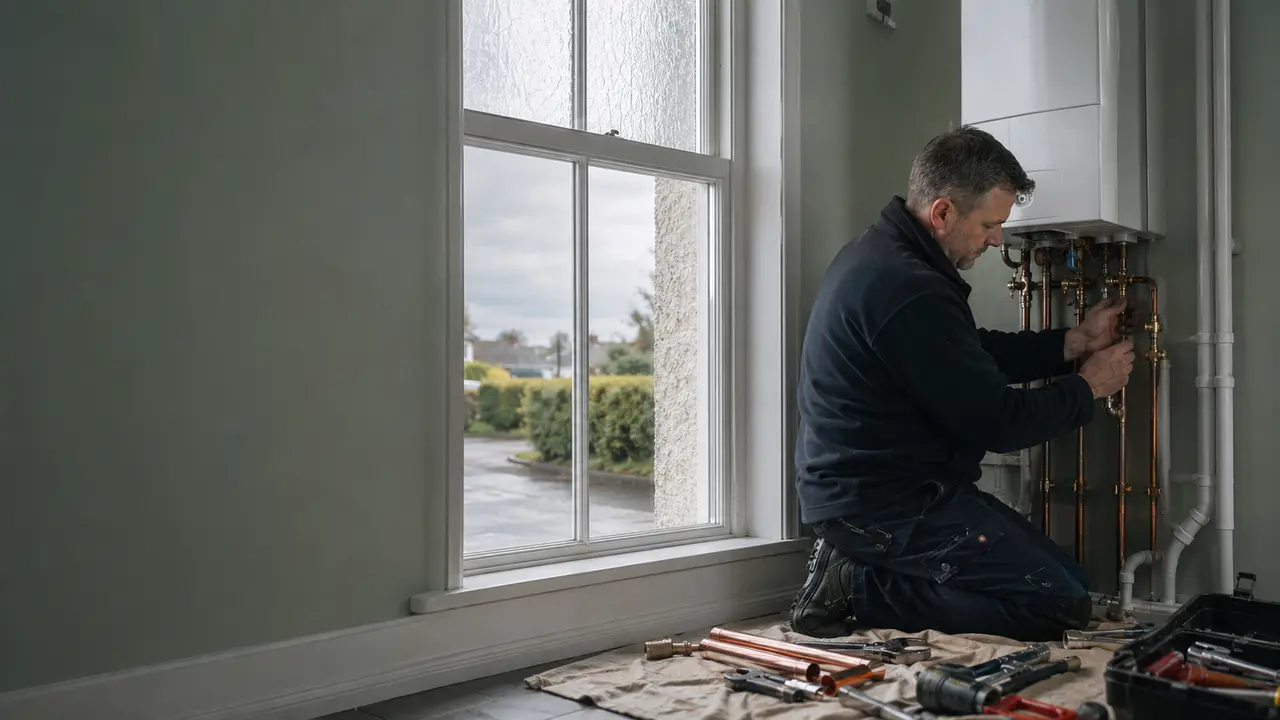
The three boiler types
Before looking at costs, it helps to understand which boiler type suits your home. The three main types in Ireland are combi, system and regular (heat-only), and each has a different price point and installation requirement.
Combi boiler
A combination boiler heats water on demand directly from the mains. There is no storage cylinder and no cold water tank in the attic. Combi boilers are the most popular choice for Irish homes built from the 1990s onward: they are compact, efficient and well-suited to properties with one or two bathrooms.
A new combi boiler fully installed typically costs €1,800 to €2,800 in Ireland in 2026, depending on brand, output rating and the complexity of the installation.
System boiler
A system boiler heats water that is stored in a hot water cylinder, usually in an airing cupboard. Unlike a regular boiler, a system boiler does not require a cold water tank in the attic — the pressure is fed from the mains. System boilers suit homes with higher hot water demand or multiple bathrooms.
Installed cost is typically €2,500 to €3,800 including a new cylinder if required.
Regular (heat-only) boiler
A regular boiler, sometimes called a conventional or heat-only boiler, requires both a hot water cylinder and a cold water feed tank in the attic. They are most common in older Irish homes built before the 1980s where the original pipework was designed for this system. Replacing a regular boiler like-for-like typically costs €2,200 to €3,200.
Most RGI installers will assess your current system and recommend whether a like-for-like replacement or a switch to a different boiler type makes more sense for your home. Ask for this assessment before agreeing to a quote.
What affects the installation cost
The figures above assume a reasonably straightforward installation. Several factors can push the cost higher:
- Flue relocation. Moving the flue outlet to a new position on an external wall adds time and materials.
- Pipework changes. Switching from a regular boiler to a combi requires removing the attic tank and cylinder and rerouting pipework throughout the house. This can add €600 to €1,200 to the job.
- System flush. An installer should always recommend a power flush or chemical flush of the heating system before fitting a new boiler. Sludge in old radiators shortens boiler life significantly. Budget an additional €200 to €400 for this.
- Location. Dublin and the greater Dublin area typically carry a 10 to 15 per cent premium over rural counties due to demand and travel time.
- Boiler brand. Worcester Bosch, Viessmann and Ideal are common premium brands. Budget alternatives are available but check warranty terms carefully.
What to expect on the day
A like-for-like combi boiler replacement is typically a single-day job. The installer will isolate the gas and water supply, remove the old boiler, fit and commission the new unit, test all connections, and carry out a flue gas analysis to confirm safe combustion.
Before leaving, a reputable RGI installer will hand you a Certificate of Completion confirming the work was carried out to the required standard. Do not make final payment without receiving this certificate. It is your legal record of compliance and will be required if you sell the property.
Never allow anyone other than an RGI registered gas installer to fit or work on a gas boiler in Ireland. This is a legal requirement, not just best practice. Ask to see their RGI card before work begins. How to verify an RGI number.
SEAI grants in 2026
SEAI (Sustainable Energy Authority of Ireland) runs several home energy upgrade schemes. As of 2026, the primary grant focus has shifted toward heat pumps and deeper home retrofits under the National Home Energy Upgrade Scheme.
If you are replacing a gas boiler with a more efficient gas boiler within an existing gas system, standalone boiler grants are limited. However, if your boiler replacement is part of a broader retrofit — adding insulation, upgrading windows, or considering a heat pump — SEAI grants can be substantial. Check seai.ie for current scheme details and eligibility.
For oil-to-gas conversions, Gas Networks Ireland periodically offer connection incentives. If you are currently on oil heating and mains gas is available in your area, it is worth getting a quote that includes any available connection support.