
What is natural gas?
Natural gas is delivered to Irish homes via the Gas Networks Ireland underground pipeline network. If your home is connected to mains gas, you have a meter outside and pay a supplier such as Bord Gais Energy or Flogas Natural Gas for the gas you use.
The Gas Networks Ireland network covers most cities and larger towns: Dublin, Cork, Limerick, Galway, Waterford and many towns throughout Leinster and Munster. A gas meter on the outside of your home means you are on natural gas.
What is LPG?
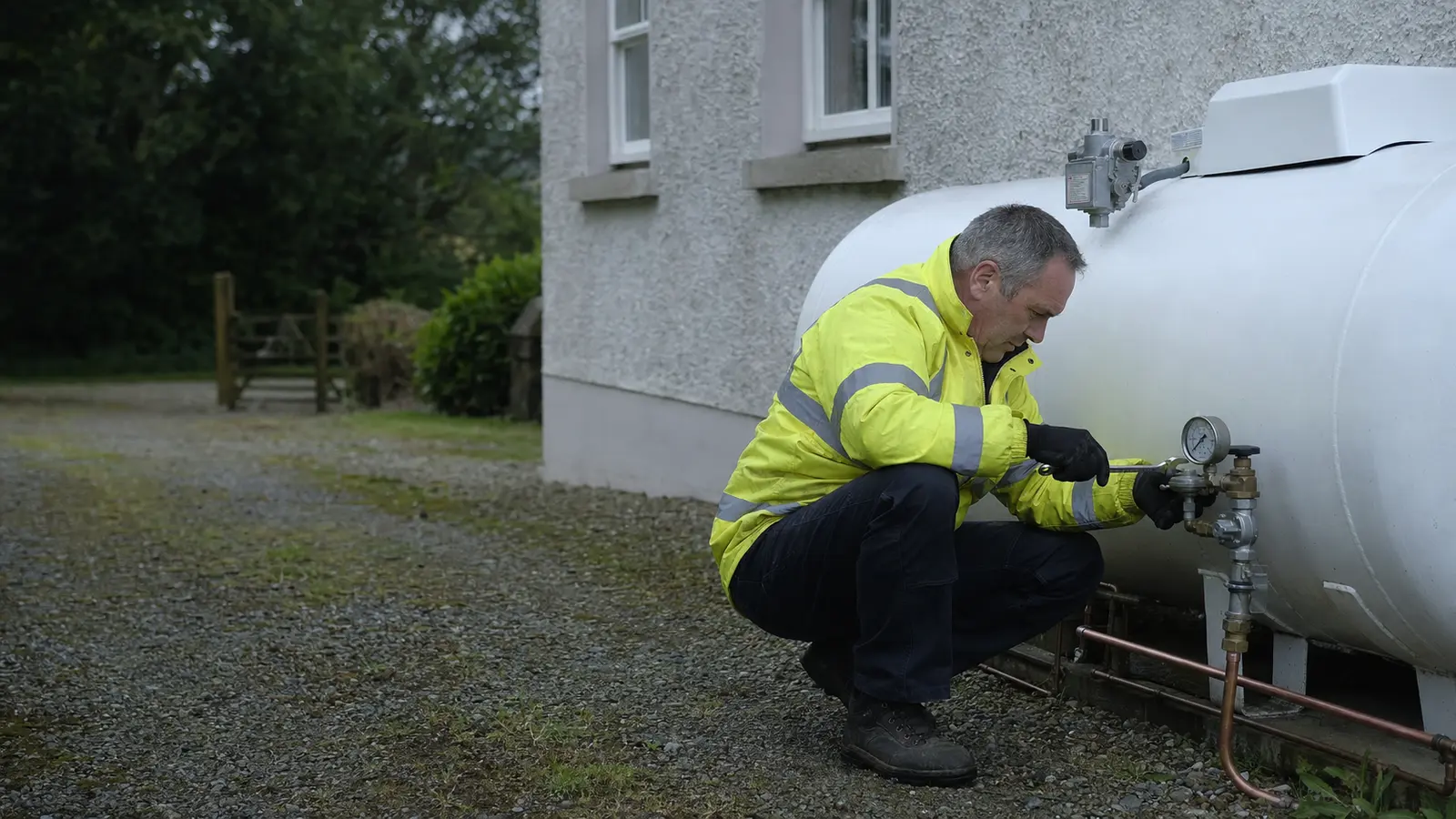
LPG stands for liquefied petroleum gas. It is stored as a liquid under pressure and used as a gas when it vaporises. In Ireland, LPG is used primarily by homes that are not connected to the mains gas network — rural properties, farms, and areas where the Gas Networks Ireland pipeline has not reached.
LPG is typically stored in a large white or grey tank in the garden, supplied by companies such as Calor Gas or Flogas. Some users rely on bottled gas cylinders for cooking or supplementary heating, but tank-based LPG is more common for whole-home heating systems.
Not sure which type you have? Check outside your home. A gas meter connected to the street means mains natural gas. A large tank in the garden means LPG. Cylinder connections inside mean bottled LPG.
Do both need an RGI installer?
Yes. RGI (Registered Gas Installer) registration covers both natural gas and LPG systems in Ireland. Whether your home runs on mains gas or tank LPG, any installation, repair, servicing or maintenance work must be carried out by an RGI registered installer.
The law makes no distinction between the two systems. If gas is involved, RGI registration is a legal requirement. More about what RGI registration means and covers.
Cost comparison: natural gas vs LPG
Natural gas is generally cheaper per unit of energy than LPG in Ireland. For homes on the mains network, natural gas remains one of the more cost-effective heating fuels available, particularly with a modern high-efficiency condensing boiler.
LPG is more expensive per unit than natural gas but is often the only practical gas heating option for homes off the mains network. The cost comparison between LPG and oil-fired heating varies with fuel prices and should be reviewed periodically.
For homes seriously considering their heating options, SEAI heat pump grants can make electric heat pump systems a compelling long-term alternative, particularly in newer or well-insulated properties.
Switching from LPG to natural gas
Gas Networks Ireland periodically extends the mains network to new areas. If your area is on their expansion list, connection costs may be subsidised or structured in a way that makes switching financially viable.
Once connected to mains gas, your existing LPG appliances may need adjustment or replacement. Natural gas and LPG operate at different pressures and the appliance gas jets are different sizes. An RGI registered installer can assess your appliances and advise on what needs to change.
Where is natural gas available in Ireland?
The Gas Networks Ireland mains network is concentrated in urban and suburban areas. Cities and large towns are almost always on mains gas. Rural Ireland, particularly in Connacht, Ulster and parts of Munster, relies predominantly on oil or LPG for heating.
If you are unsure whether mains gas is available in your area, Gas Networks Ireland has an address lookup tool on their website where you can check connection availability.