
Heat pumps and your plumbing: what an RGI plumber does in Ireland
The commissioning, pipework and hot-water cylinder work your plumber carries out in a heat pump retrofit, and how to find the right tradesperson near you.
The plumber's role
What does a heat pump plumber do in Ireland?
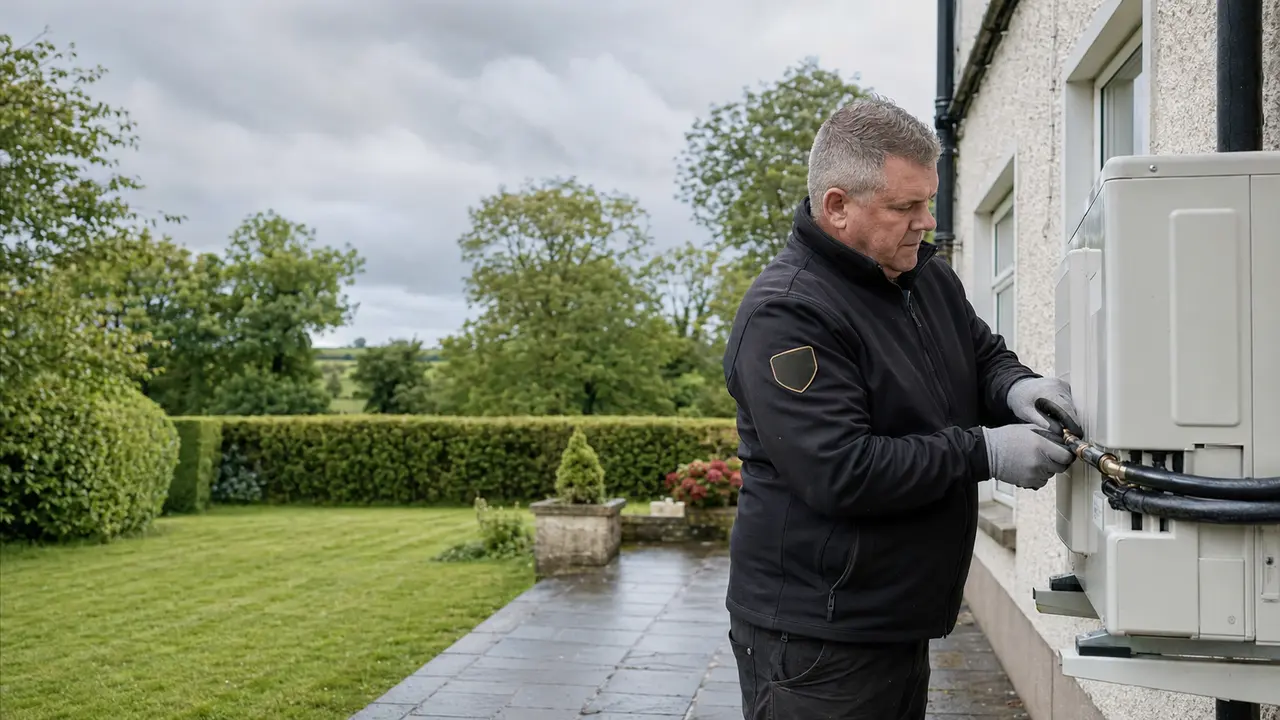
A heat pump plumber in Ireland is responsible for the pipework, commissioning and hot-water cylinder work that connects a heat pump to your home's heating system. This is a distinct role from the HVAC installer who supplies and fits the heat pump unit itself. The two trades often work on the same job, at different stages, and understanding what each one does helps you know who to hire and when.
Pipework installation
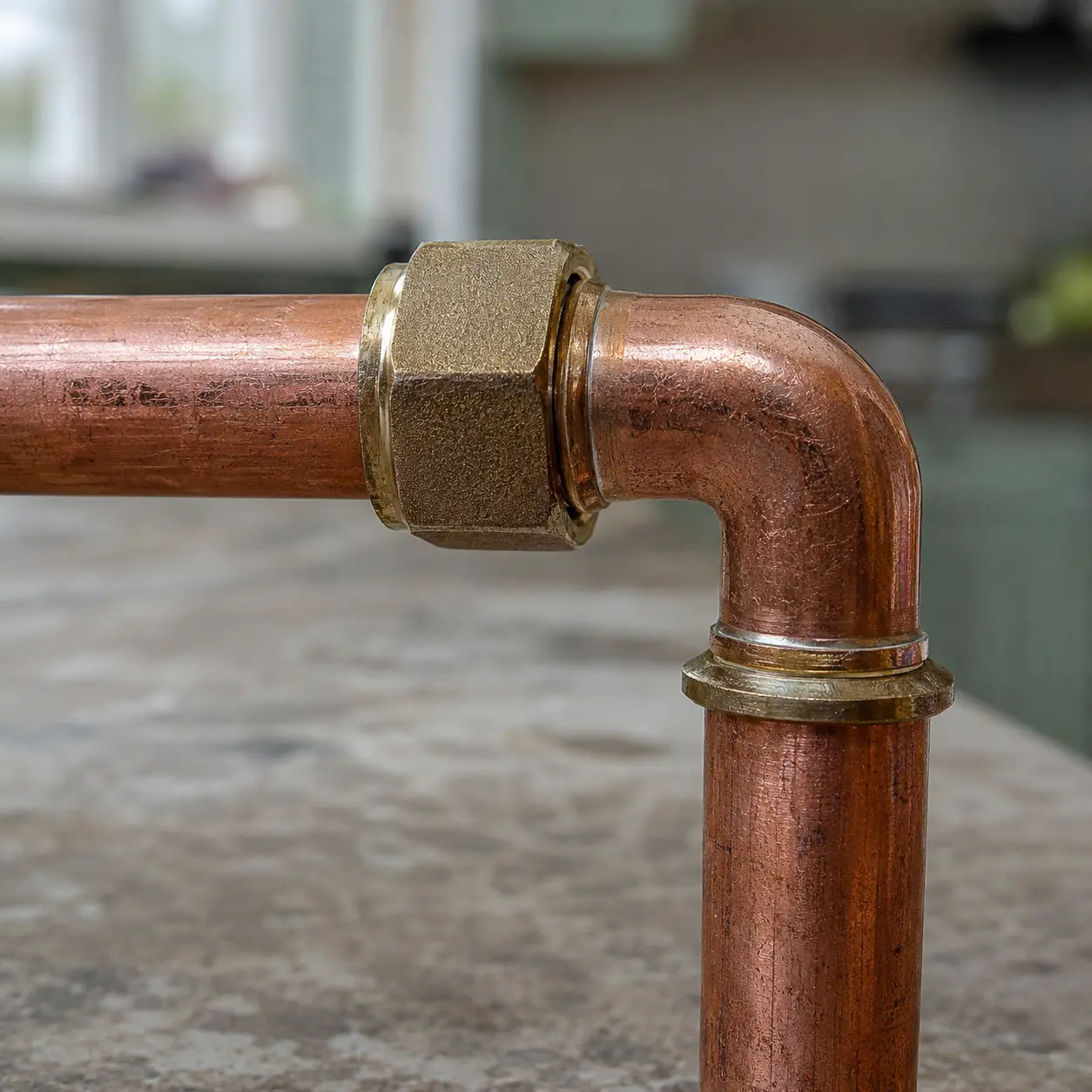
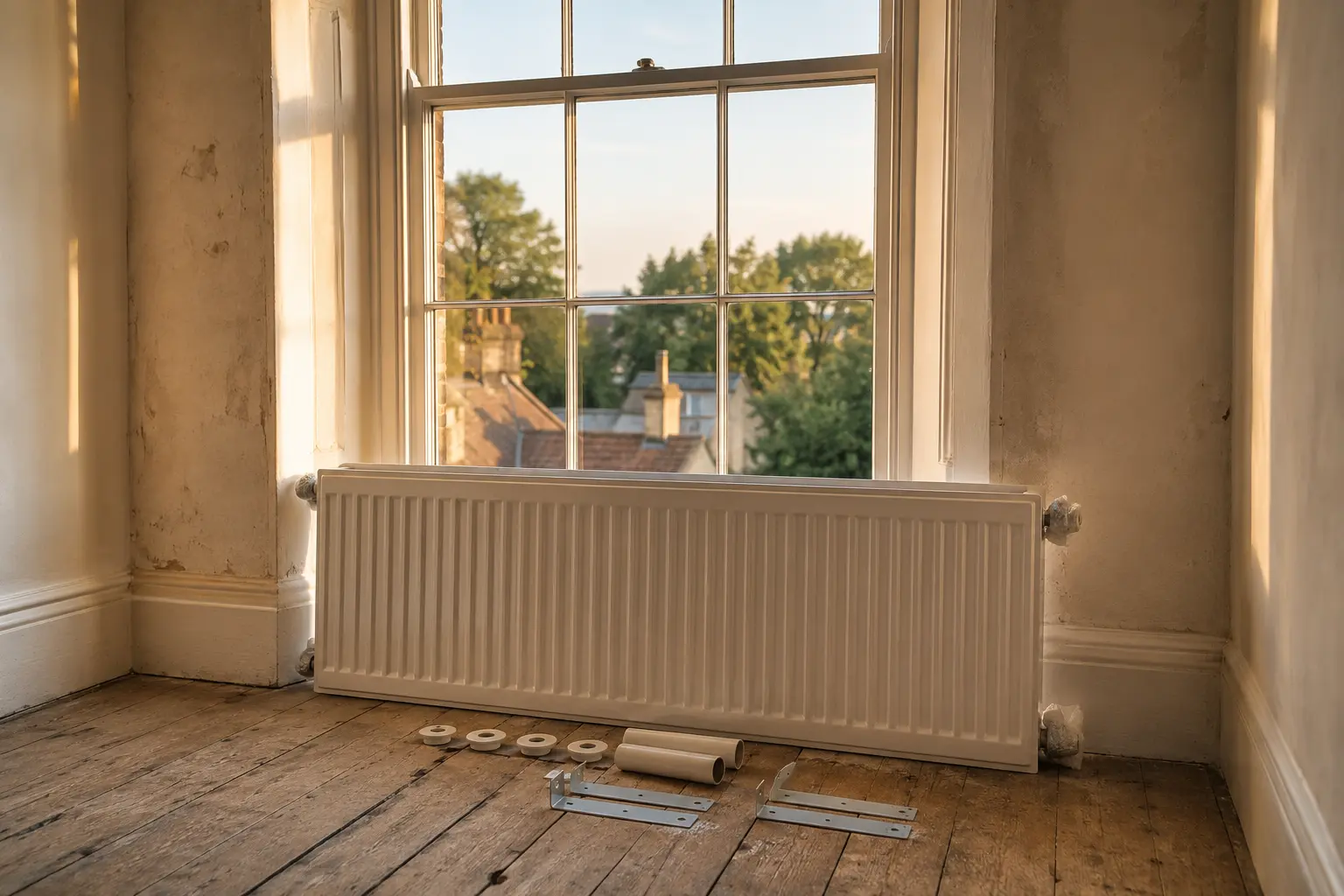
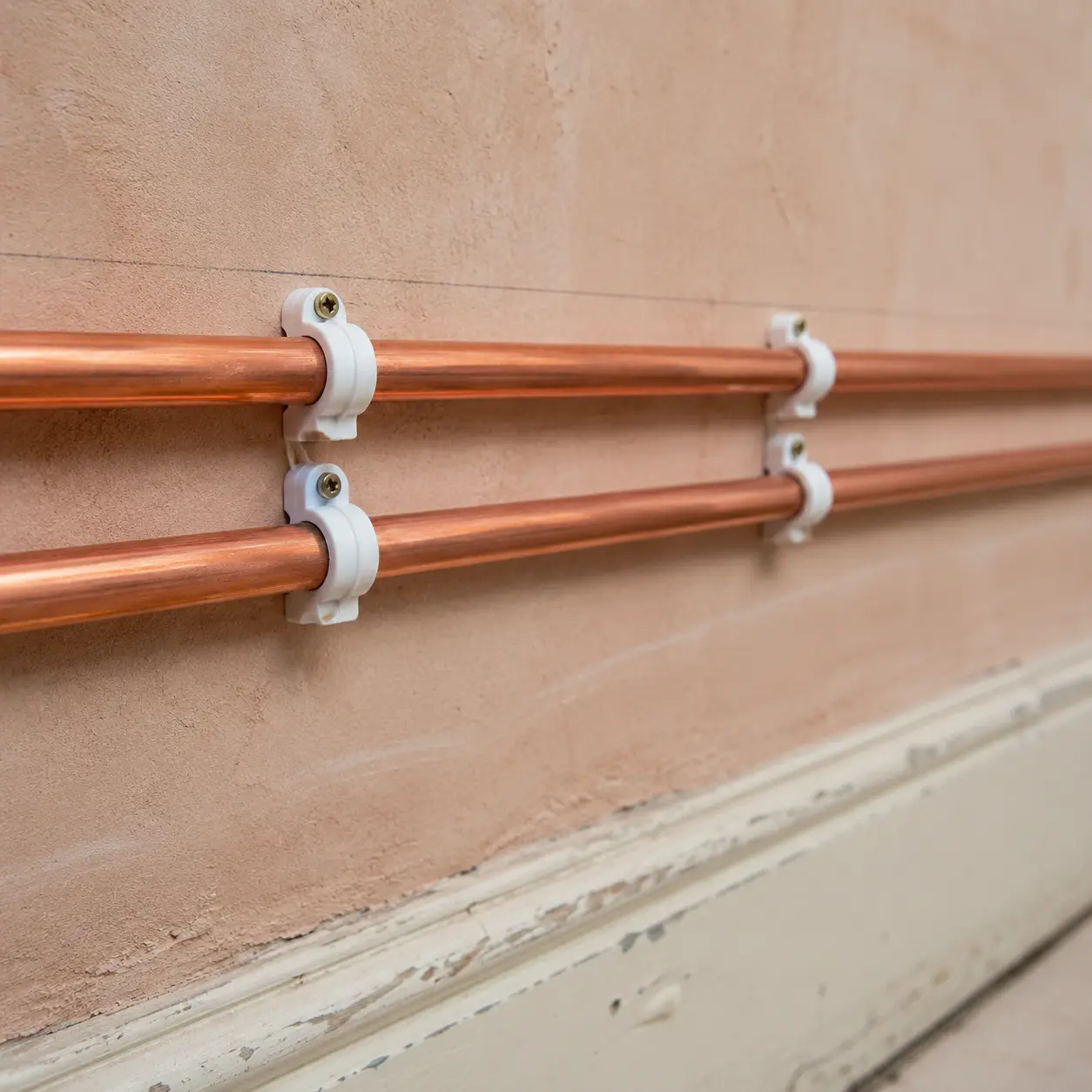
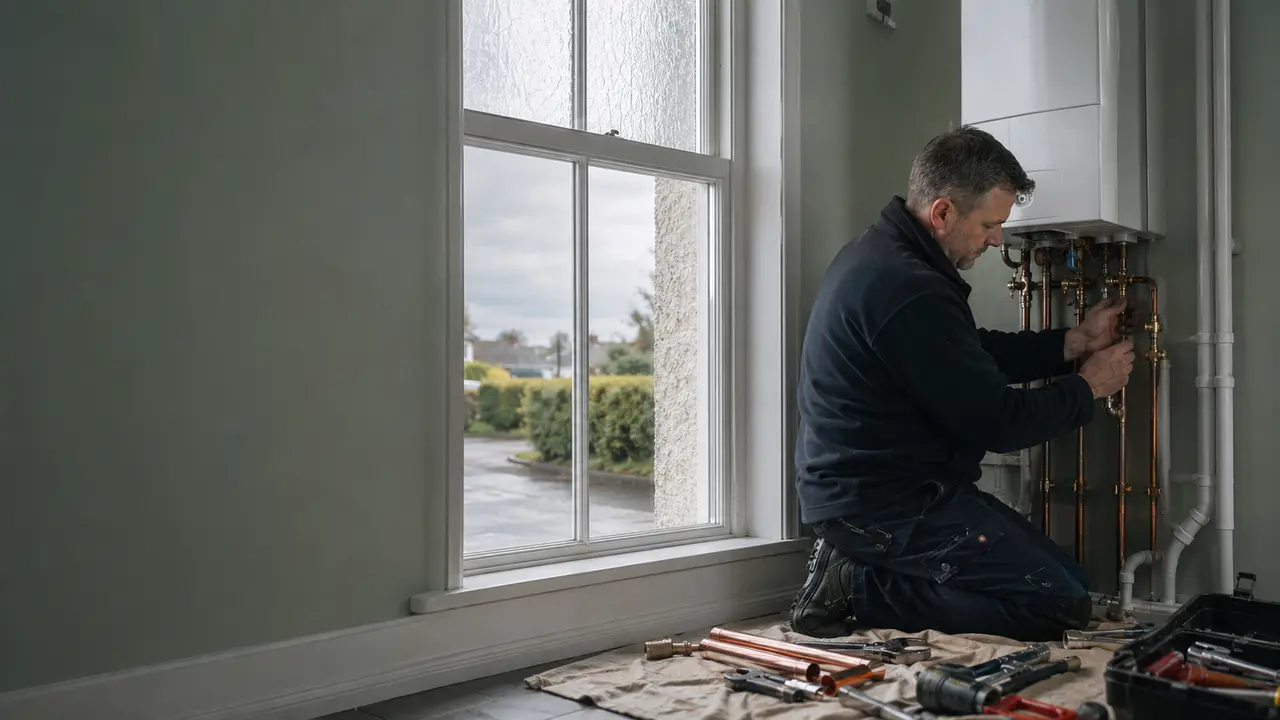
The plumber connects the heat pump to your existing wet heating system, whether that is a radiator circuit or underfloor heating. In most retrofits, the existing pipework can be reused with modifications. Where radiators are too small for the lower flow temperatures a heat pump produces, the plumber will replace them with larger panels or add additional radiators to the circuit.
Hot-water cylinder work
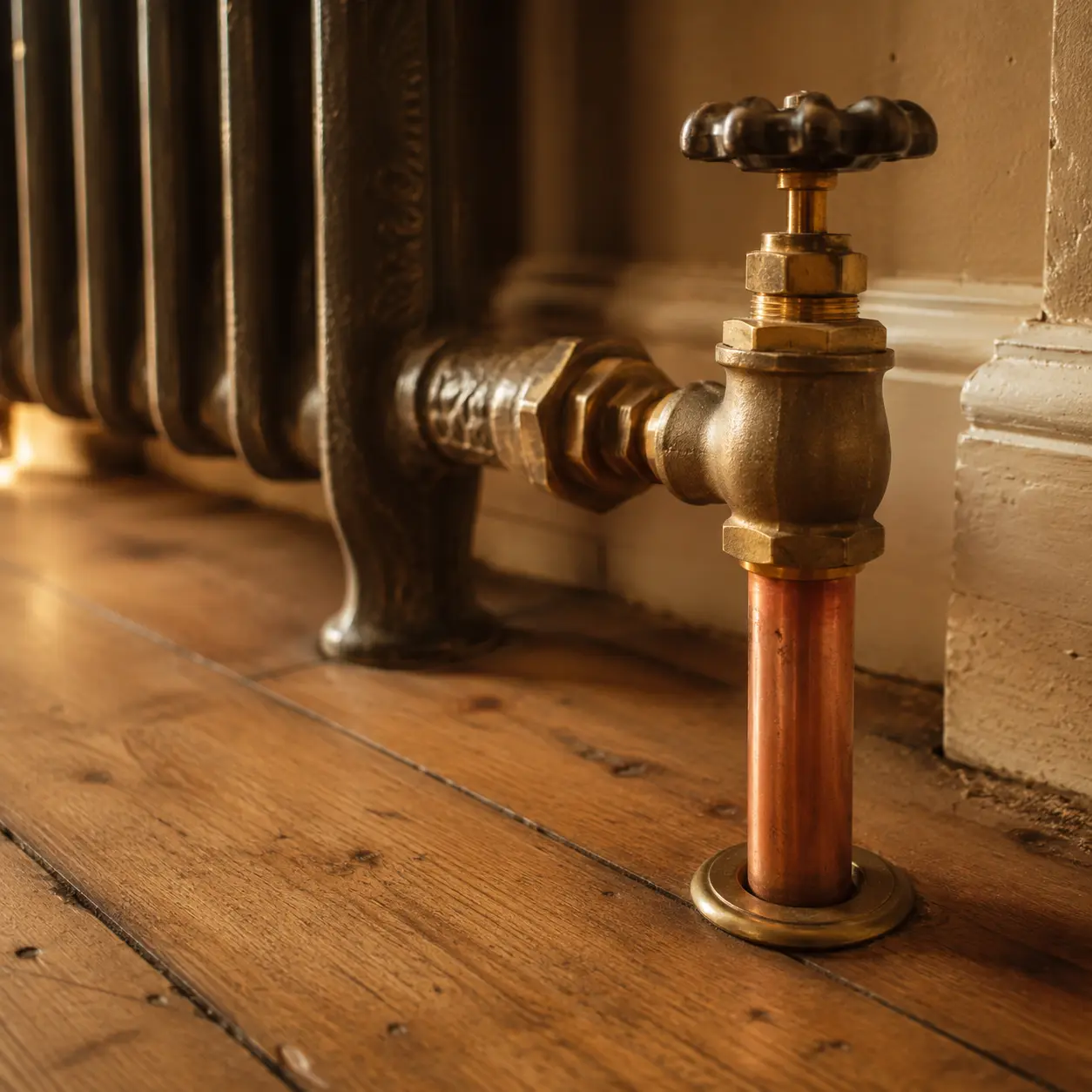
Most existing hot-water cylinders are not compatible with heat pumps. The plumber will assess your current cylinder and, in most cases, replace it with a heat-pump-specific model: a larger-capacity unit with a bigger coil designed for low-temperature heat transfer. This cylinder replacement is one of the significant costs in any heat pump retrofit.
Commissioning
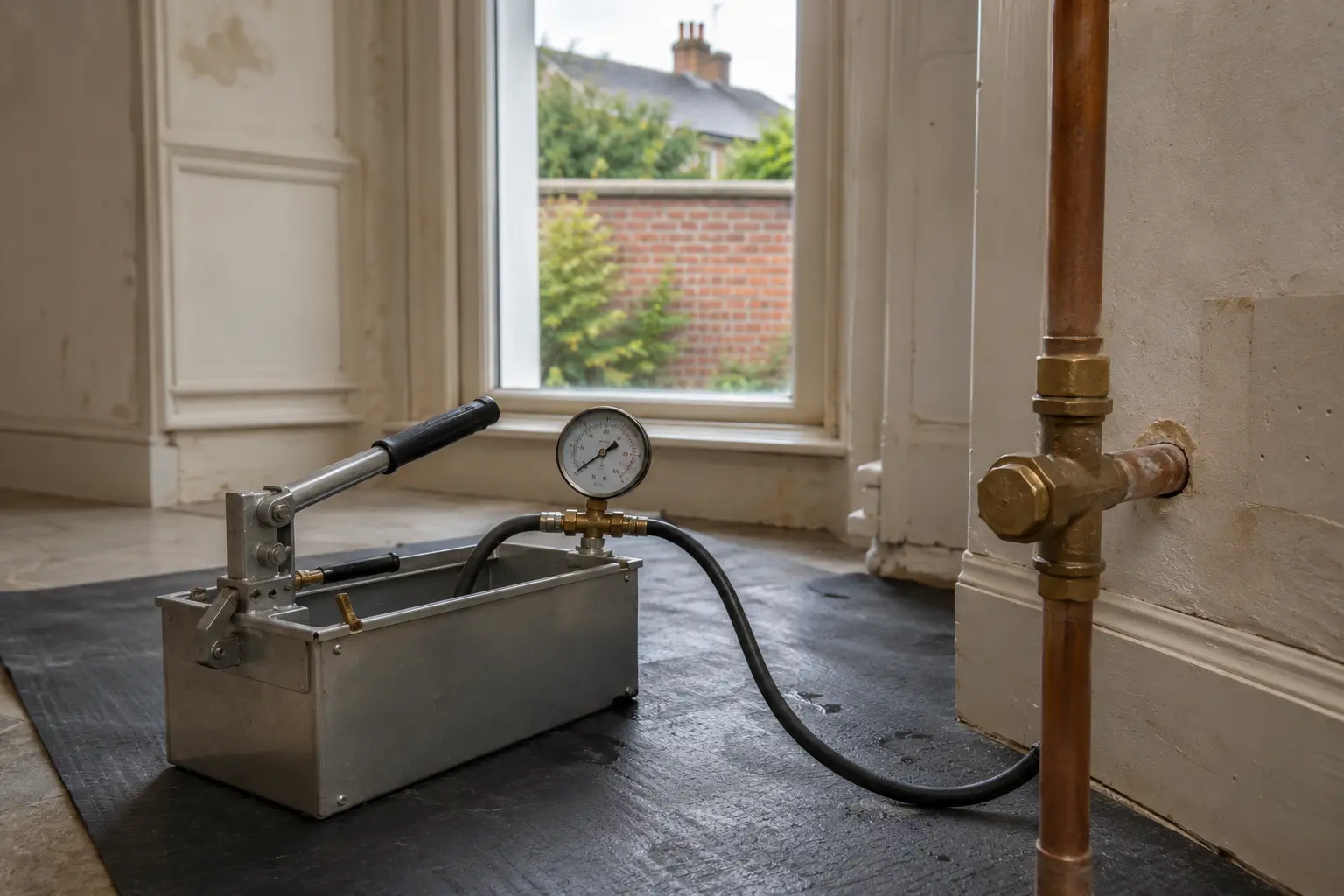
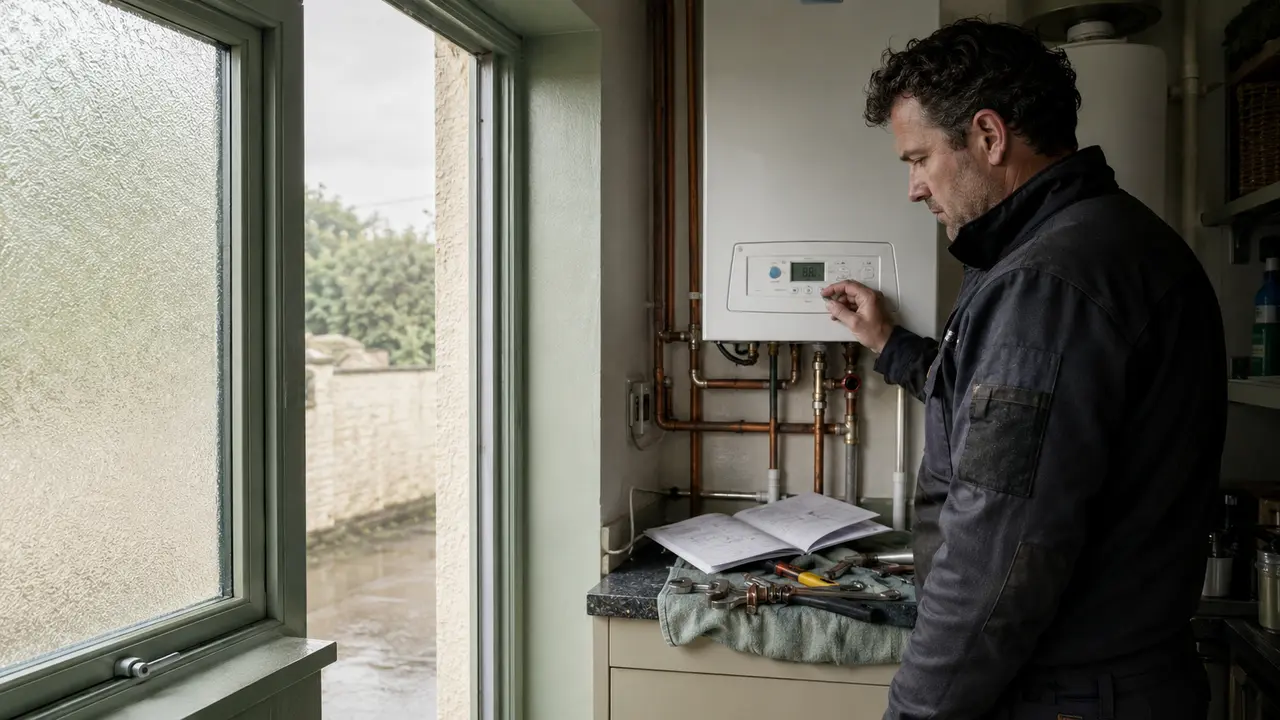
Commissioning is the final stage, where the plumber pressure tests all pipework, balances the heating circuit, sets the flow temperature for the heat pump, configures the controls, and completes the commissioning documentation. Without a properly commissioned system, a heat pump will run inefficiently and may not meet your SEAI BER requirements.
Find an RGI plumber near you
What to expect on the day
Heat pump commissioning in Ireland: the plumber's checklist
Commissioning is not a quick sign-off. A thorough commissioning visit typically takes four to six hours and covers every element of the heat pump's interaction with your home's plumbing. Here is what an RGI plumber works through.
Pressure testing all pipework
The entire heating circuit is pressure tested before any water goes into the system. This confirms there are no leaks at joints or connections. A system that holds pressure at 1.5 times working pressure is ready to fill.
Balancing radiators and underfloor circuits
Each radiator or underfloor zone is balanced so heat is distributed evenly across the house. With a heat pump running at lower flow temperatures than a gas boiler, proper balancing is more important than it would be with a conventional system.
Setting the flow temperature
Heat pumps work at their most efficient at low flow temperatures, typically 35 to 45 degrees Celsius. The plumber sets this on the heat pump controller and confirms the radiator sizing is adequate to heat the home at that temperature.
Commissioning the hot-water cylinder
The new heat pump cylinder is connected, filled and brought up to temperature. The immersion heater backup is tested, the thermostat is set, and the cylinder's legionella cycle (a periodic high-temperature pasteurisation cycle) is configured.
Configuring controls and smart thermostat
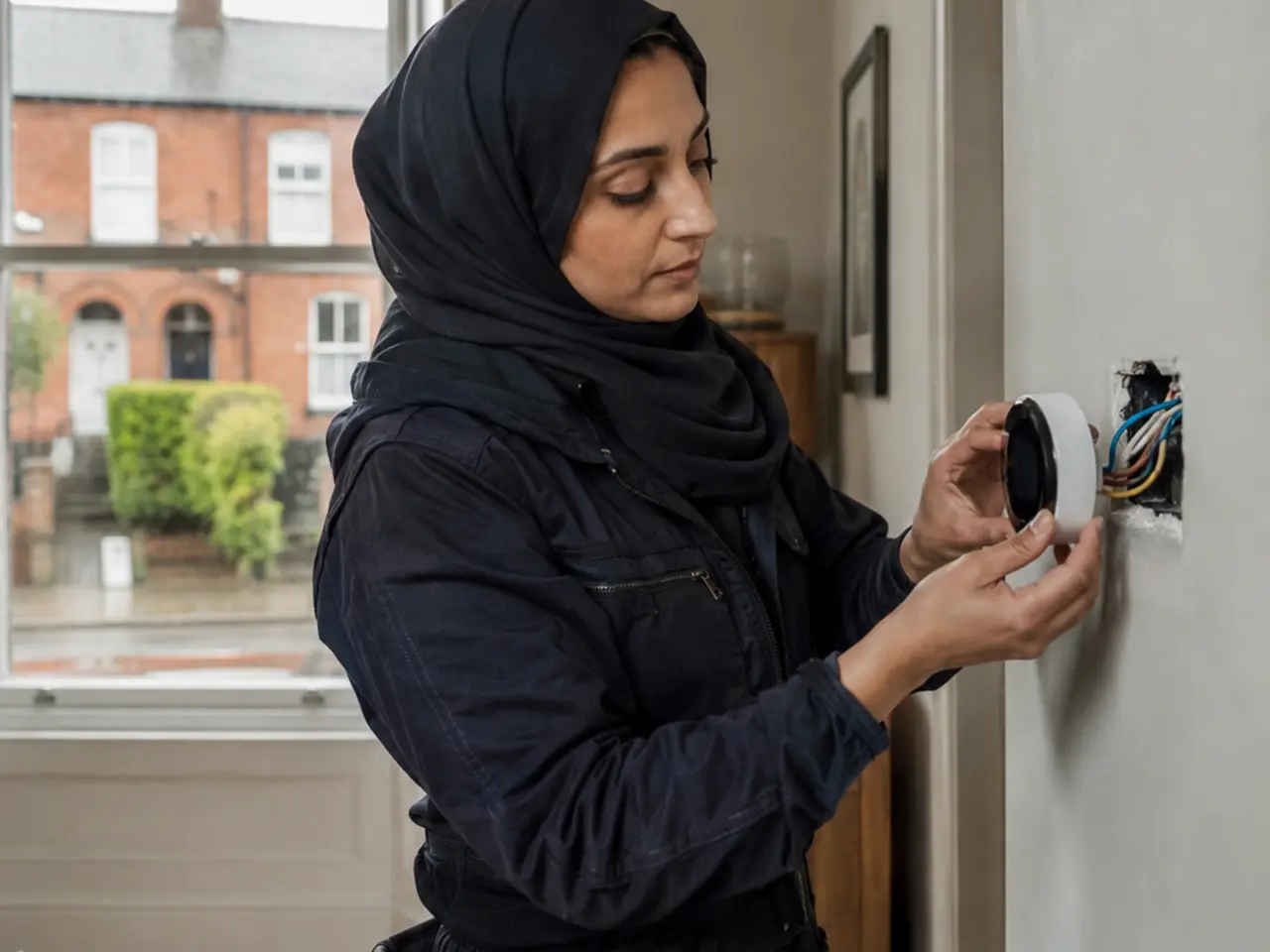
The plumber sets up the heat pump controller, time schedules and, where fitted, a smart thermostat. Correct weather compensation settings are applied so the heat pump modulates output based on outside temperature rather than running at full power all the time.
Commissioning record and handover
The plumber completes the commissioning record, which is required for your SEAI grant claim and your BER certificate. You receive a copy of this document along with the heat pump manufacturer's commissioning sheet. Keep both with your home documents.
Cylinder replacement
The hot-water cylinder: what changes when you switch to a heat pump
Most homes switching to a heat pump need a new hot-water cylinder. The standard vented copper cylinder fitted in most Irish homes is designed for the high flow temperatures produced by a gas or oil boiler. A heat pump operates at lower temperatures, which means the coil inside the cylinder needs to be significantly larger to transfer the same amount of heat.
What type of cylinder does a heat pump need?
A heat pump cylinder is an unvented pressurised unit with a large lower coil, typically 2.5 to 3 metres in length, designed to work at the 35 to 45 degree flow temperatures a heat pump produces. It is larger than a standard cylinder, usually 200 to 300 litres, and includes an immersion heater as backup for periods of high demand or very cold weather.
Twin-coil cylinders for solar or future flexibility
Many plumbers will recommend a twin-coil cylinder when a heat pump is installed. The second coil can connect to a solar thermal panel at a later date, giving you the option of adding solar water heating without replacing the cylinder again. This adds a small upfront cost but is often the right long-term choice.
Cylinder replacement costs in Ireland
Supply and installation of a heat pump cylinder typically costs €1,500 to €2,500 in Ireland, depending on the capacity and whether the cylinder location needs to change. This cost is separate from the heat pump unit and its installation. For more detail, see our hot water cylinder guide.
Pipework and distribution
Heat pump pipework and your existing radiators in Ireland
One of the most common questions when considering a heat pump is whether your existing radiators can stay. The answer depends on their size relative to the rooms they heat, and on the flow temperature the heat pump needs to run at efficiently.
Why flow temperature matters
A gas boiler heats water to 70 or 80 degrees Celsius. A heat pump runs most efficiently at 35 to 45 degrees. At a lower flow temperature, a radiator gives out less heat per unit of surface area. A radiator that was adequate on a gas boiler may not be large enough to heat the same room at the lower temperature a heat pump requires.
Radiator sizing and replacement
Your plumber will calculate the heat loss for each room and check whether the existing radiators can deliver enough output at the target flow temperature. Where they cannot, the options are replacing them with larger panels, adding a second radiator to the circuit, or accepting a slightly higher flow temperature in that zone. In most Irish semi-detached homes built after 1980, the majority of radiators can be retained with selective upgrades.
Underfloor heating and heat pumps
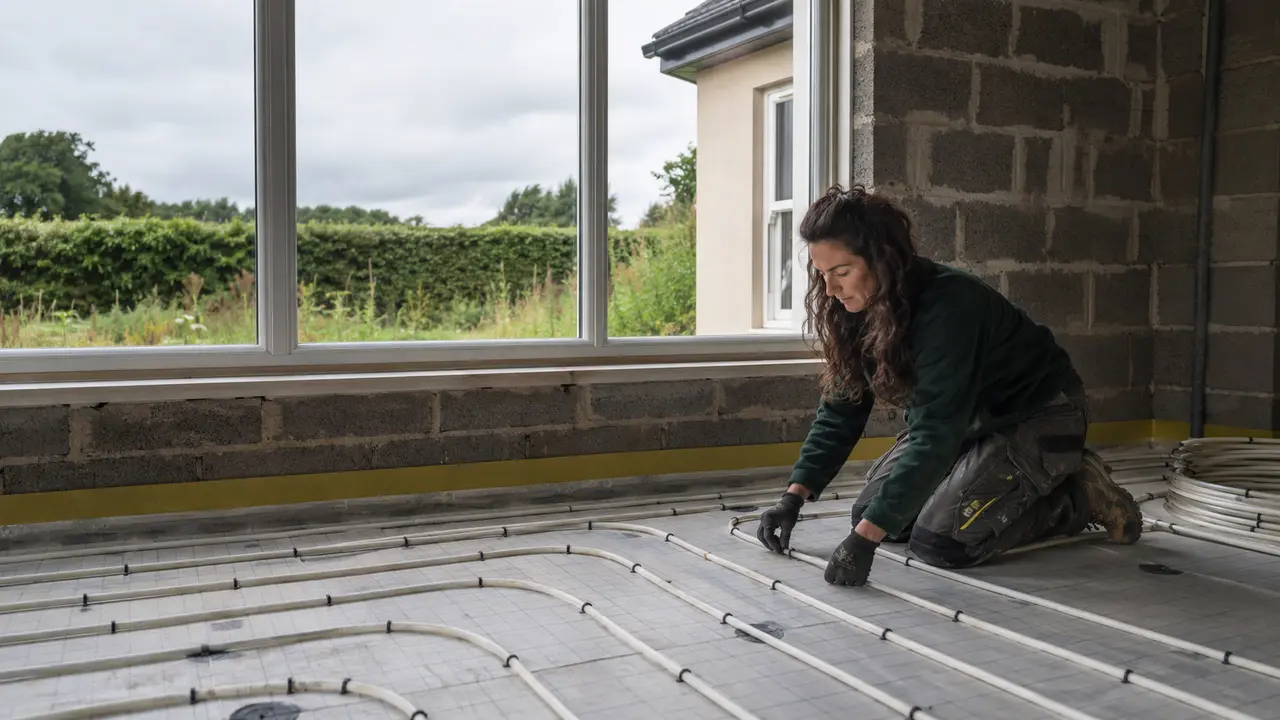
If you have underfloor heating, a heat pump is an ideal match. Underfloor systems operate at very low flow temperatures (30 to 40 degrees) which are well within a heat pump's efficient operating range. No pipework changes are usually needed in underfloor zones. For more detail, see our underfloor heating guide.
Before work starts
Is your home ready for a heat pump? Three things to check first
A heat pump performs at its best in a home that is well prepared. Getting three things in order before the plumber and installer arrive will save you money, improve the system's efficiency, and protect your SEAI grant eligibility.
Insulation
A heat pump only reaches its designed efficiency in a well-insulated home. SEAI requires a BER assessment before approving the heat pump grant, and most heat pump systems are sized for a home at BER B or better. Getting insulation done before or alongside the heat pump makes the system more effective and reduces running costs from day one.
To find a SEAI-registered insulation contractor near you, see wallinsulationireland.ie.
Gutters and roof drainage
Blocked gutters, roof leaks and poor drainage introduce damp into the building fabric. Damp undermines insulation performance, raises the home's heat loss, and can affect the performance calculations used to size the heat pump correctly. Address any roof or drainage issues before a retrofit begins. To find a rated roofer in your county, roofersinireland.ie covers all 26 counties.
Electrical supply
A heat pump needs a dedicated 32A electrical circuit, wired by a RECI-registered electrician before the plumber commissions the unit. Your electrician connects the heat pump to the consumer unit, installs the dedicated circuit and ensures the supply meets the heat pump manufacturer's requirements. The plumber and electrician coordinate the commissioning date between them.
Find a plumber for your heat pump
Qualified plumbers across all 26 counties of Ireland. Free to use.
Registration and compliance
RGI registration and gas boiler disconnection in Ireland
If your current heating system is a gas boiler, it must be safely decommissioned and disconnected before the heat pump is commissioned. This work must be carried out by an RGI (Register of Gas Installers of Ireland) registered engineer. It is a legal requirement under the Gas Safety (Installation and Use) Regulations. An unregistered person cannot legally disconnect a gas appliance in Ireland, and any property sale or insurance claim may be affected if this work was done without registration.
What RGI registration covers
RGI registration applies to all gas work in Ireland: installation, commissioning, repair, and decommissioning of gas appliances and pipework. For a heat pump retrofit, the RGI element is specifically the disconnection and capping of the gas boiler supply, and the decommissioning of the boiler itself. Once this is done, the plumber takes over for the heat pump pipework and commissioning.
How to verify an RGI number before hiring
The Register of Gas Installers of Ireland publishes a public searchable register at rgii.ie. Enter the engineer's name or registration number to confirm current status. Our RGI verification guide walks through the process step by step. Always verify before any gas work begins.
- Gas disconnection must be done by a current RGI registrant
- Ask to see the registration card before work starts
- The engineer must issue a gas safety certificate on completion
- SEAI grant paperwork requires confirmation of RGI registration
Two different trades
The heat pump installer and the plumber: who does what in Ireland?
A heat pump installation in Ireland involves two separate tradespeople, each responsible for a distinct part of the job. Knowing who does what helps you plan the timeline, get the right quotes and make sure nothing is missed.
Supplies and fits the heat pump unit
- Selects and supplies the heat pump unit
- Handles the SEAI grant application
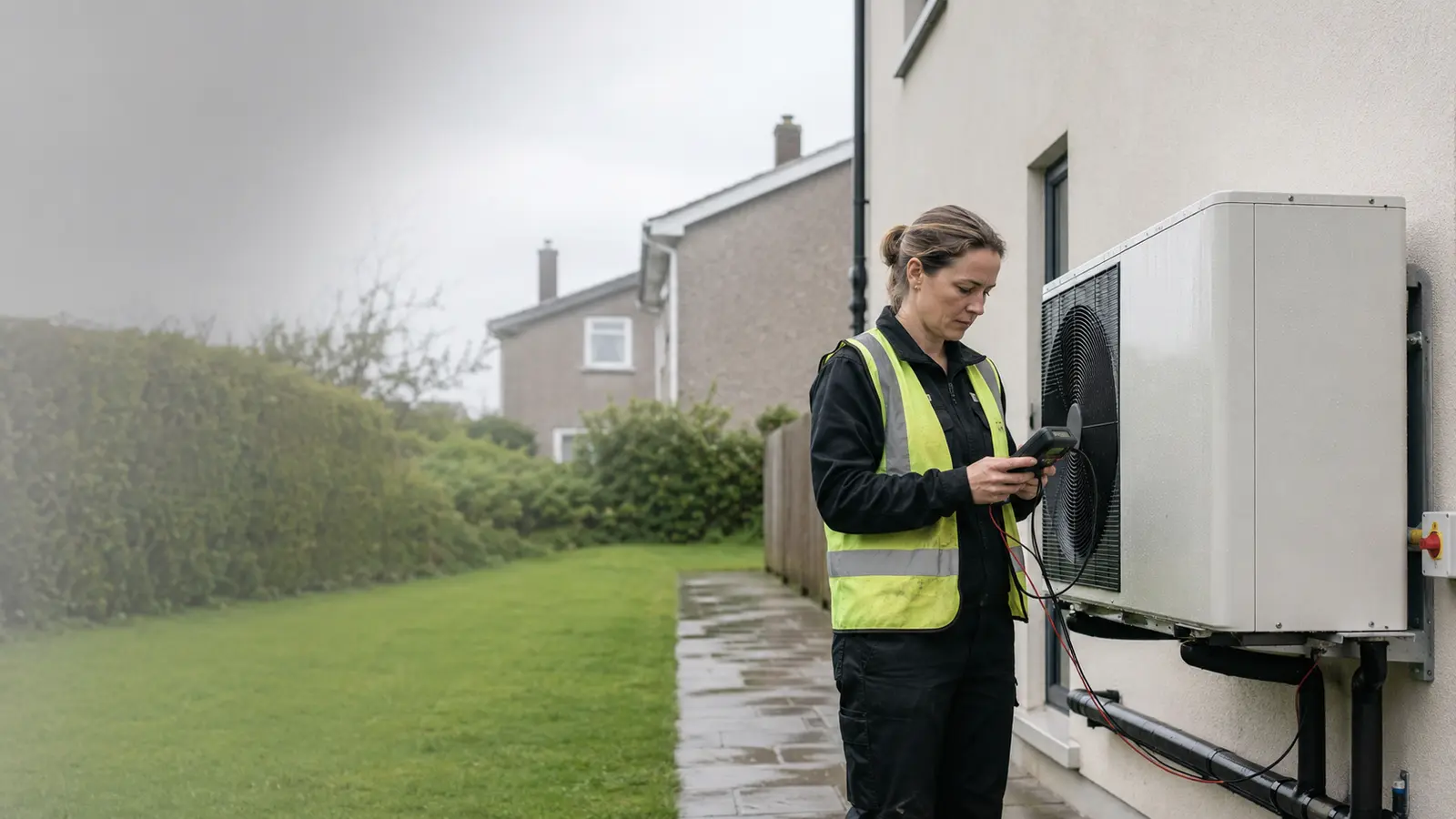
- Mounts the outdoor unit and runs refrigerant lines
- Connects the indoor unit to the hydronic system
- Responsible for the BER assessment requirement
To find a SEAI-registered heat pump installer, see registered heat pump installers in Ireland at hvacinireland.ie.
Commissions the plumbing side
- Connects the heat pump to the wet distribution system
- Replaces and commissions the hot-water cylinder
- Balances radiators and underfloor circuits
- Sets flow temperatures and controls
- Completes the commissioning record for SEAI
Find a plumber for heat pump commissioning in your county at plumbersinireland.ie.
In practice, many heat pump installation companies include a plumber in their team, so both roles are fulfilled by one contractor. If you are managing the trades separately, make sure both parties agree on the commissioning date in advance, as the plumber cannot begin until the installer has the unit in place and the refrigerant circuit is complete.
2026 cost guide
How much does heat pump plumbing cost in Ireland?
The costs below cover the plumber's work only: pipework, commissioning and cylinder replacement. They do not include the heat pump unit or its installation, which is a separate cost managed by the HVAC installer. All figures are for the Republic of Ireland in 2026 and include labour and VAT at 9%. Always get at least two quotes before committing.
| Job | Typical cost | Notes |
|---|---|---|
| Heat pump cylinder supply and installation | €1,500–€2,500 | 200–300L unvented; larger homes at the higher end |
| Pipework connections and circuit modifications | €600–€1,200 | Varies with system complexity |
| Radiator upgrades (per radiator) | €200–€450 | Supply and fit; most homes need 2–4 |
| Full system commissioning | €400–€800 | Including controls setup and documentation |
| Gas boiler disconnection (RGI) | €150–€350 | Required when decommissioning a gas system |
| Typical total plumbing cost (no cylinder) | €1,000–€2,000 | Pipework, balancing and commissioning only |
| Typical total plumbing cost (with cylinder) | €2,500–€4,500 | Cylinder plus all plumbing and commissioning |
For a full overview of plumbing costs in Ireland, see our plumbing costs guide.
Related plumbing and heating guides
More guides from plumbersinireland.ie on heating installations, hot water and SEAI grants.
Find a plumber near you
Ready to commission your heat pump?
Whether you need pipework, commissioning or a new cylinder, finding the right heat pump plumber in Ireland starts here. Search by county and connect with qualified tradespeople across all 26 counties of Ireland.