Check if it is the whole house or one tap
Turn on taps in different parts of the house and compare the flow. If pressure is poor at every outlet, the issue is with the incoming supply, the pressure reducing valve, or a leak somewhere in the main supply pipe. If only one tap or shower is affected, the issue is localised — usually a blocked aerator, a partially closed isolation valve under the unit, or a failing tap cartridge.
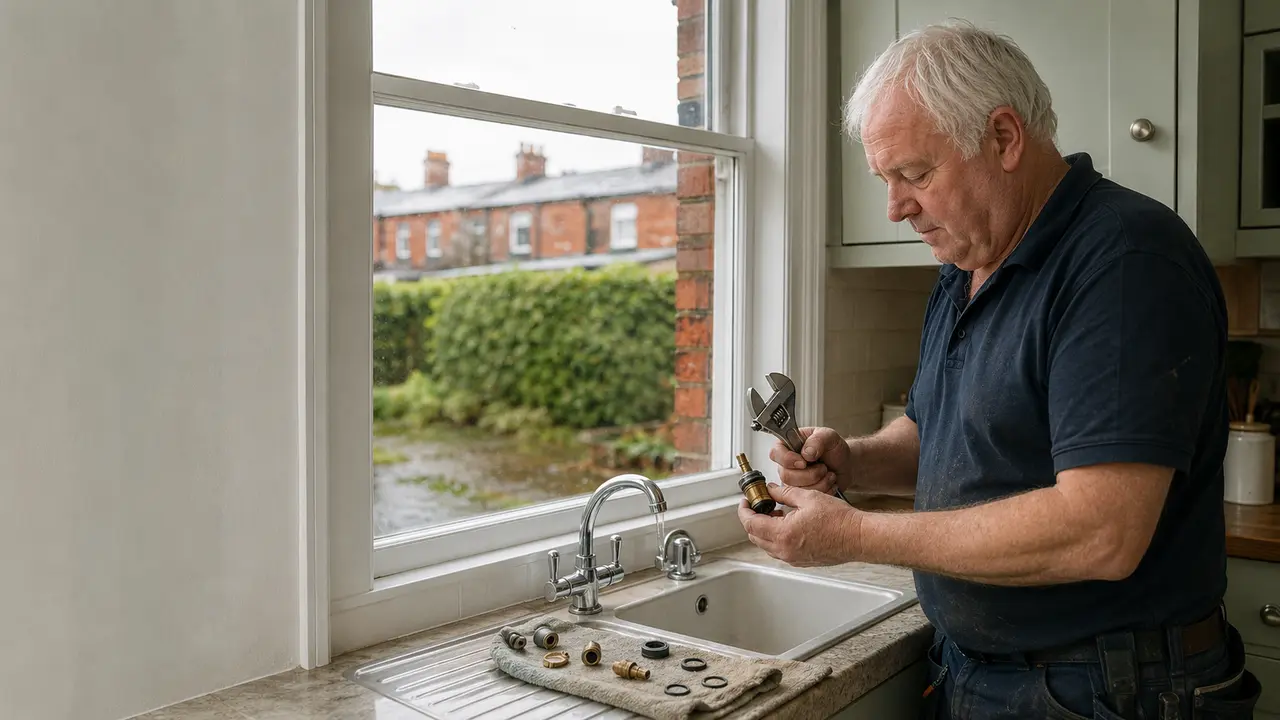
A blocked showerhead or tap aerator is the simplest fix: unscrew it, soak it in white vinegar overnight, and refit. This restores flow in limescale-affected areas like Dublin, Kildare, and Meath.
Check with your neighbours and Irish Water
If multiple houses in your street have low pressure at the same time, the issue is with the Irish Water (Uisce Eireann) mains supply, not your property. Check the Irish Water outage map at water.ie or call their customer care line. They are responsible for maintaining supply pressure up to your property boundary — if the problem is theirs, they must fix it.
If your neighbours have normal pressure but yours is low, the issue is within your property boundary. The most common culprits are the pressure reducing valve or a partial blockage in the incoming supply pipe.
Pressure reducing valve
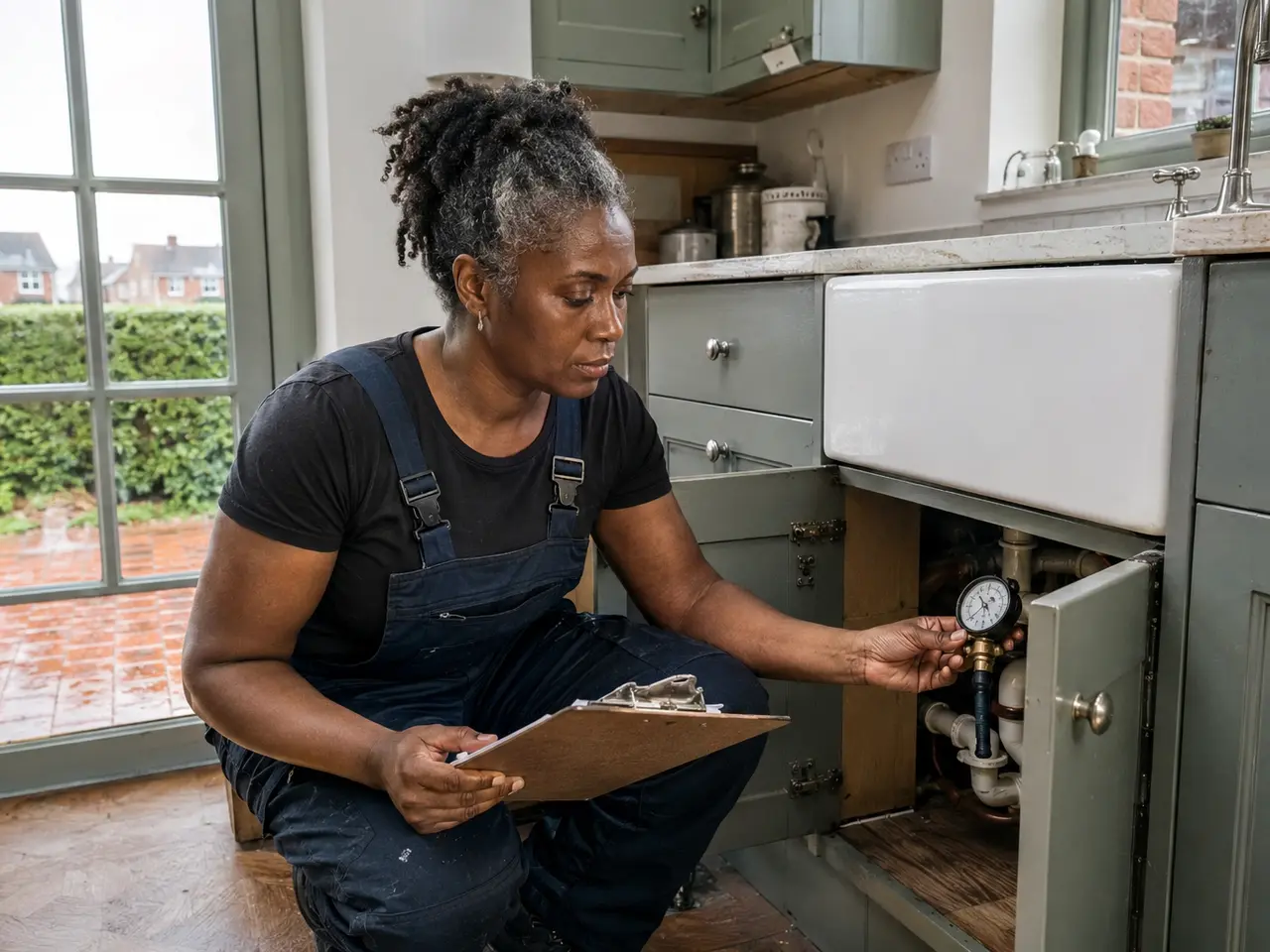
Many Irish homes have a pressure reducing valve (PRV) fitted where the mains supply enters the house, typically near the stopcock under the kitchen sink or where the supply pipe enters through the wall. The PRV protects your internal plumbing from high mains pressure.
Over time, PRVs can fail in two ways: they can stick open (causing too much pressure) or they can restrict flow (causing low pressure). A plumber can test the PRV with a pressure gauge and replace it if needed. PRV replacement typically costs €180 to €320 including parts and labour and makes an immediate difference to whole-house flow.
Scale and pipe corrosion
In hard water areas (Dublin, Kildare, Meath, Wicklow, Tipperary), limescale gradually builds up inside pipes and fittings, narrowing the internal bore and reducing flow. This happens over years, so pressure loss is slow and often goes unnoticed until it becomes significant.
Older galvanised steel pipes are particularly prone to internal corrosion and narrowing. A plumber can assess your pipe condition and recommend replacement sections where needed. Replacing old steel supply pipes with copper or plastic (MDPE) typically makes a dramatic difference.
Boiler system pressure vs mains pressure
It is important to distinguish between mains water pressure (how hard water comes out of your taps) and boiler system pressure (the pressure in your central heating circuit). These are two completely separate systems.
If low pressure is only affecting your heating or hot water output from a combi boiler, this is boiler system pressure. Check the boiler gauge — if it reads below 1 bar, repressurise the system using the filling loop. If pressure drops repeatedly after repressurising, there is a leak in the central heating circuit that needs to be found and fixed.