Cold at the top: bleed the radiator
A radiator that is warm at the bottom but cold at the top has trapped air. Bleeding releases the air and lets hot water fill the whole panel. Turn the heating on and let the system warm up fully, then turn it off and wait 10 minutes.
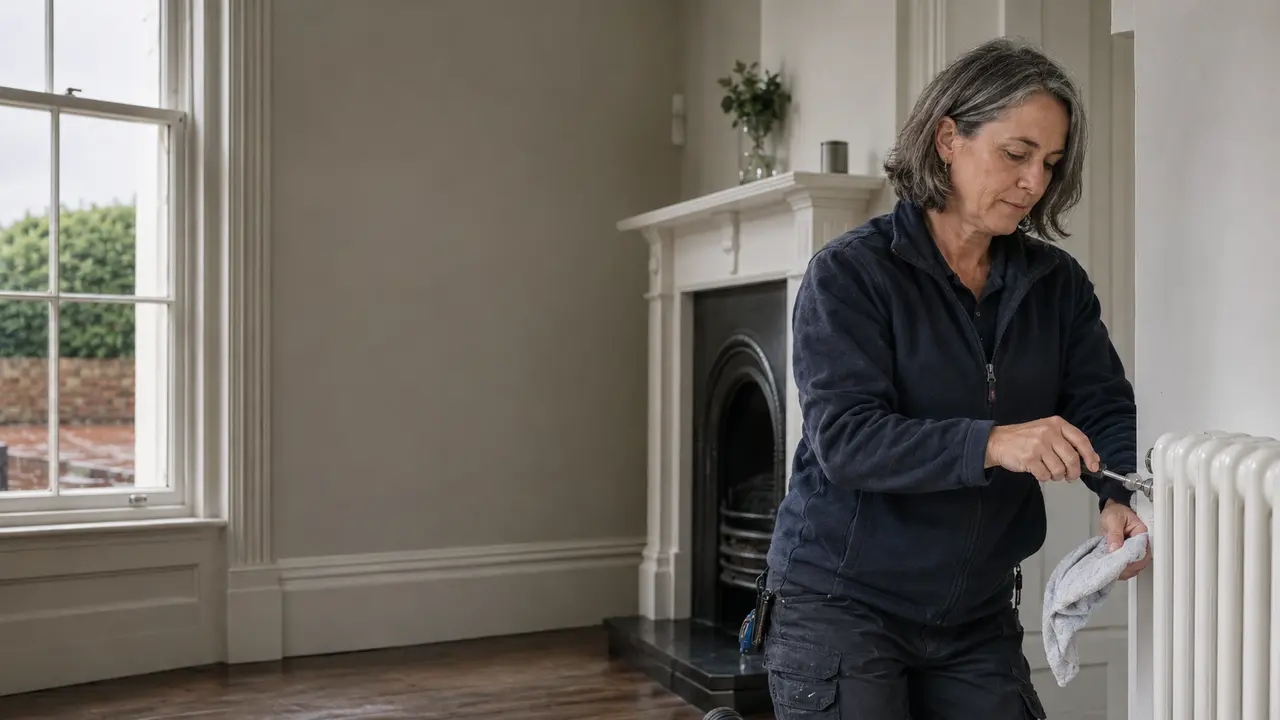
Insert a radiator bleed key (under €2 at any hardware shop) into the bleed valve at the top corner. Hold a cloth underneath. Turn the key anti-clockwise a quarter turn until you hear air hissing. Keep the key in position — once water trickles steadily out, close the valve firmly. Check your boiler pressure gauge afterwards and repressurise to 1 to 1.5 bar using the filling loop if needed.
Cold at the bottom: sludge build-up
A radiator that is hot at the top but cold at the bottom has magnetite sludge settled in the base. This is iron oxide from internal corrosion in the system, and it is very dense — it sinks and blocks the bottom section of the radiator panel.
Bleeding will not fix this. The options are to remove the individual radiator and flush it with a hose outdoors, or to power flush the whole system. A power flush circulates a descaling and sludge-removing solution through the entire heating circuit. Cost in Ireland is typically €400 to €700 for a full system power flush, which is well worth it if multiple radiators are affected.
Completely cold: check the thermostatic valve
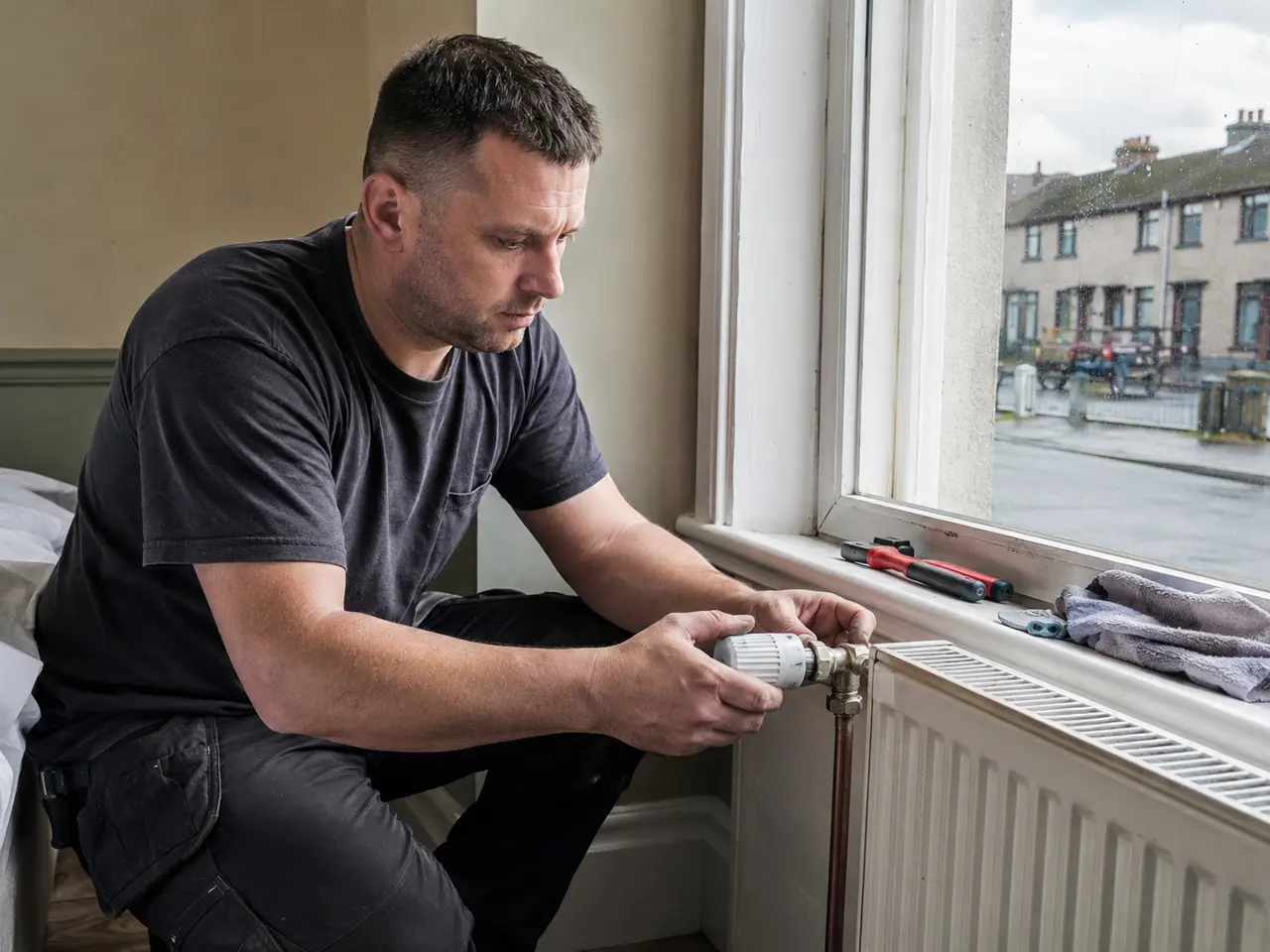
If a radiator is cold all over but the rest of the heating system is working, the thermostatic radiator valve (TRV) is the first thing to check. The TRV is the plastic-headed valve on the side of the radiator, usually marked with numbers 1 to 5. If it is set to 0 or turned fully down, turn it up to 3 or 4 and wait 20 minutes.
If the TRV is turned up but the radiator stays cold, the valve pin may be seized. Unscrew the TRV head (it pulls or unscrews off) and press the metal pin that sits underneath — it should spring in and out freely. If it is stuck in the closed position, spray with a little WD-40 and work it back and forth until it moves. A seized pin is very common on radiators that have been turned off for a season.
One zone not heating at all
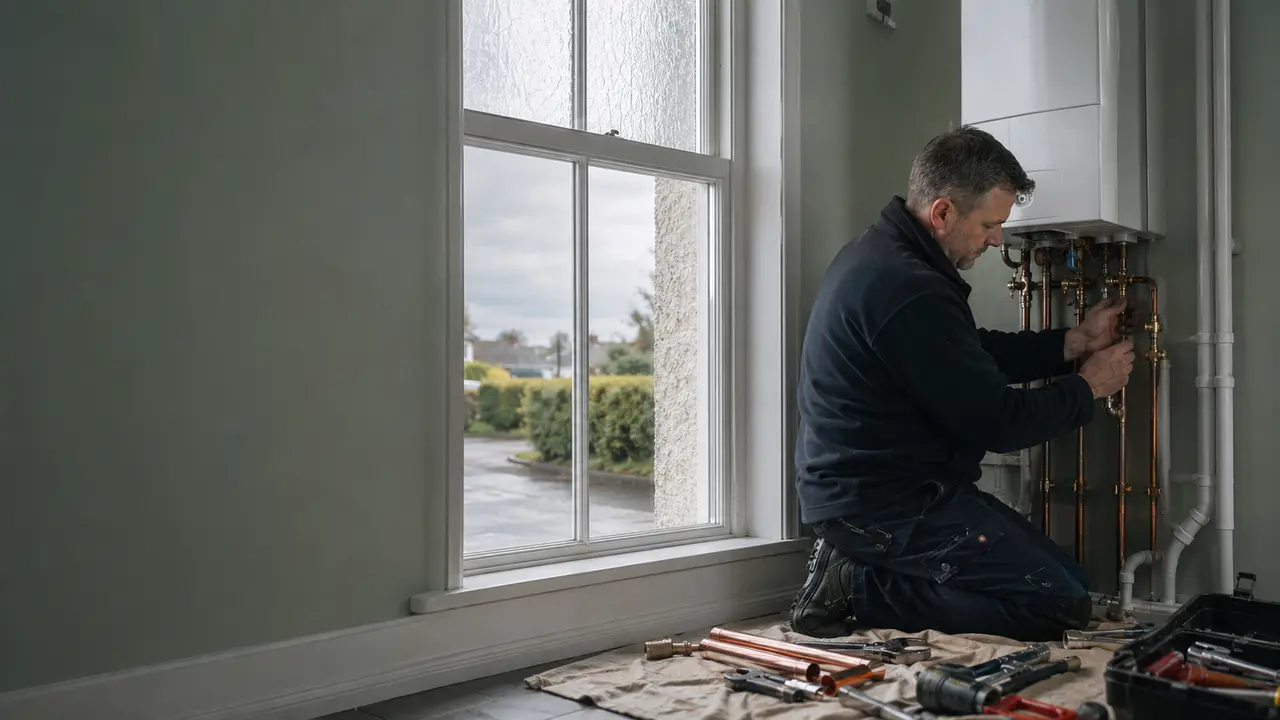
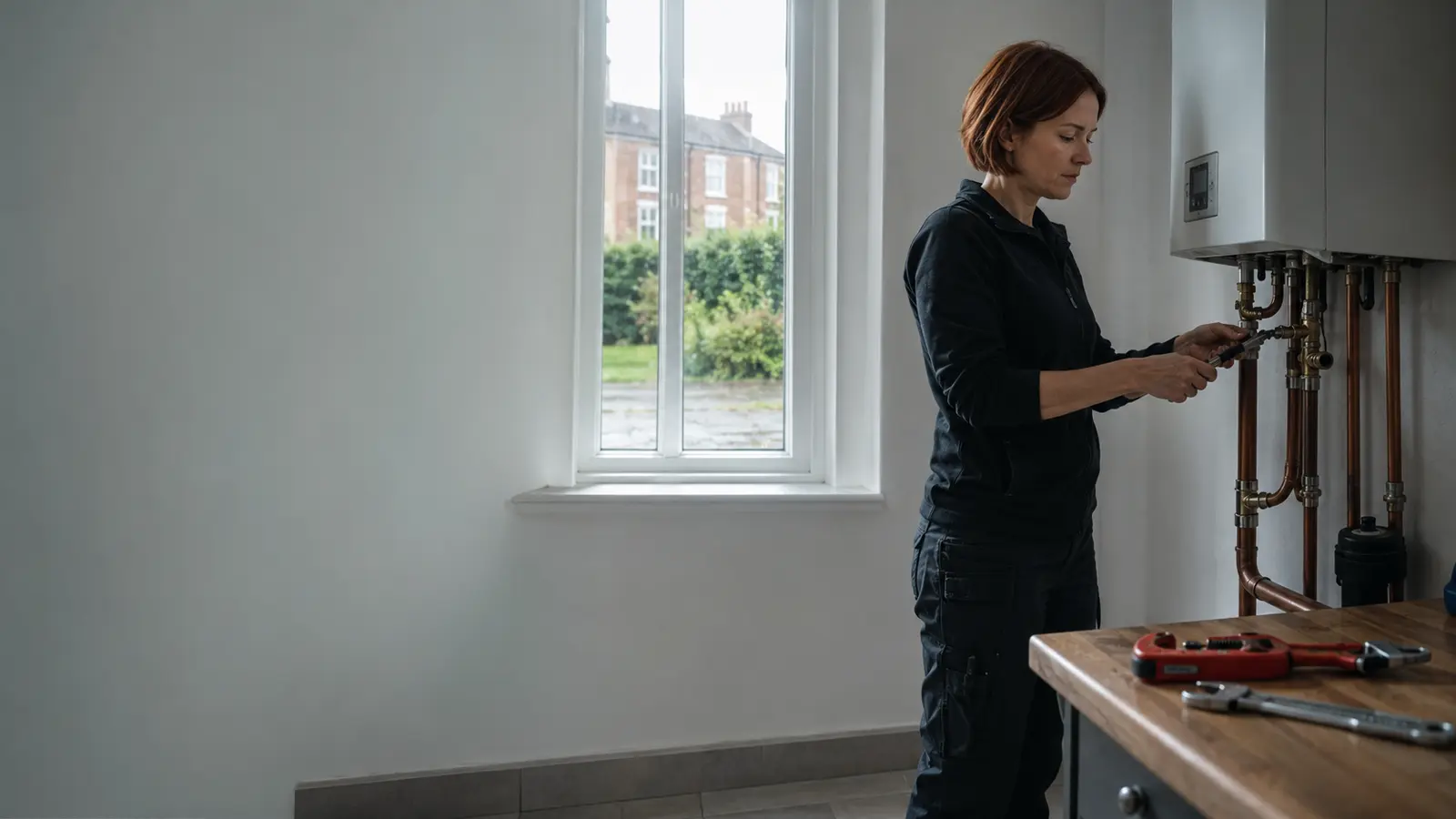
If an entire zone of your house (for example, all upstairs radiators) is cold while another zone works fine, the problem is usually a motorised zone valve. These are components in the hot press or airing cupboard that direct hot water to specific zones of the house. A failed zone valve actuator is a common fault and a straightforward repair for a plumber — typically €150 to €280 to replace.
Another cause is a faulty room thermostat or programmer for that zone. Check that the thermostat is calling for heat (temperature set above the current room temperature) and that the wiring connections are secure.
When to call a plumber
Call a plumber if bleeding does not fix cold-at-top radiators and pressure keeps dropping, if multiple radiators are cold at the bottom, if an entire zone is not heating, or if radiators make persistent banging, gurgling or hissing noises. Annual boiler servicing (€80 to €120) usually includes a basic system check that can catch these issues early.